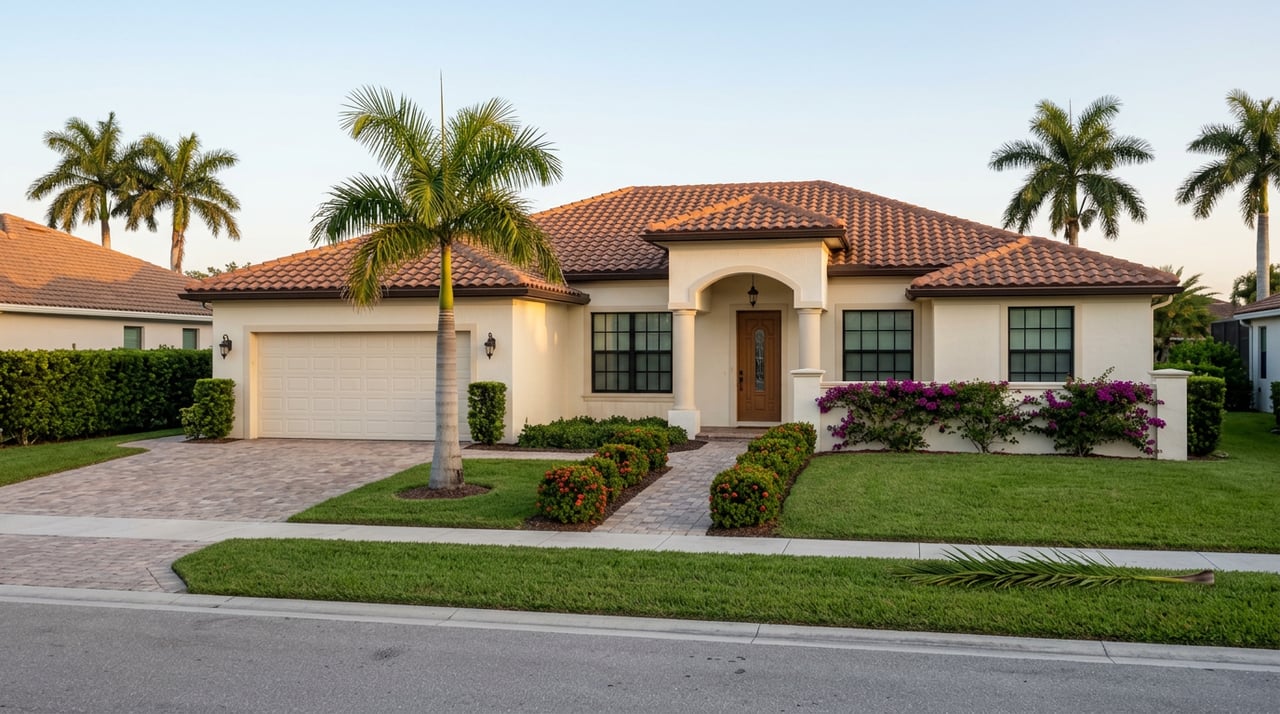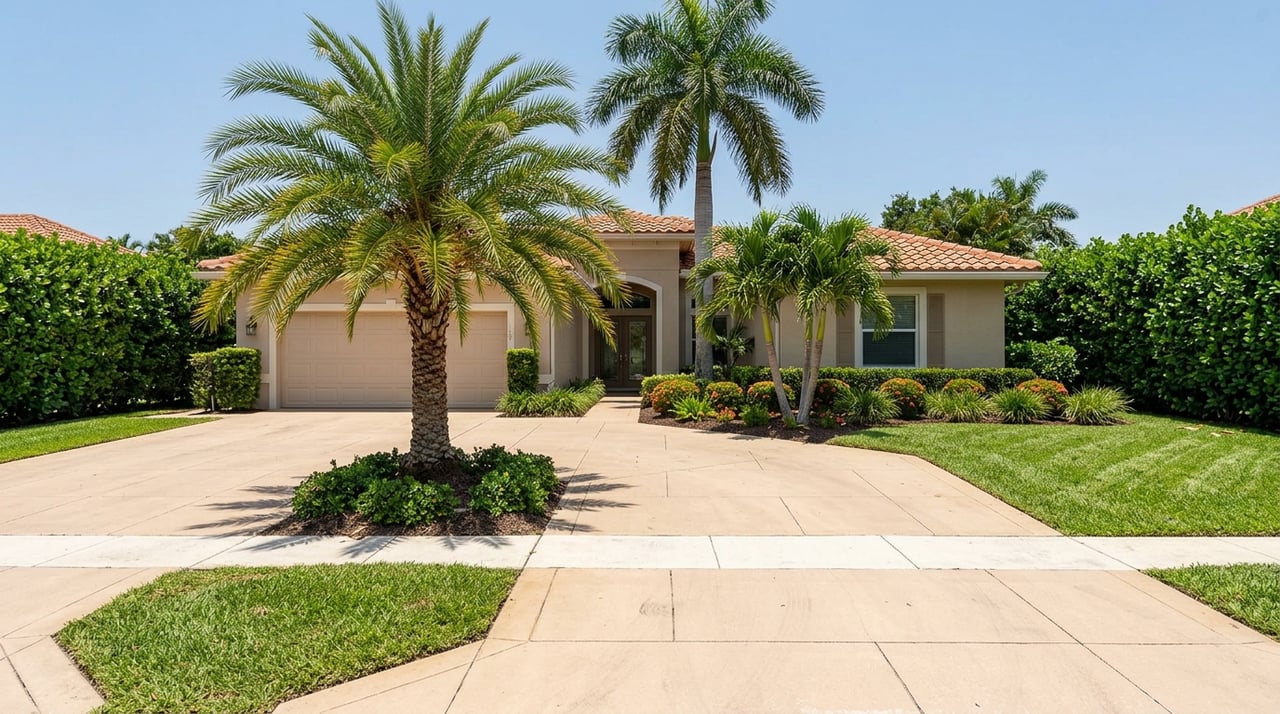
A buyer comparing two similar Weston listings, same price, same square footage, same builder era, will eventually hit a number that does not match between them. It shows up on the closing disclosure or, more often, on the estoppel a seller orders before listing. The line reads "Non-Ad Valorem Assessment," and it is not tied to a homeowners association. It is tied to which side of an invisible boundary the house happens to sit on.
Weston runs two distinct systems of government-issued assessments that most buyers, and plenty of longtime residents, have never had reason to look up: the Indian Trace Development District and the Bonaventure Development District. The City of Weston says Indian Trace covers the city except for Bonaventure; every parcel in the city falls under one or the other, never both, and the district a home belongs to can meaningfully change what a buyer pays each year on top of the sticker price.
Not the CDD You've Read About
Search "Florida CDD fees" and you'll find a familiar story: a developer issues bonds to build a community's roads and amenities, then hands control to an elected board of homeowners once the neighborhood fills in. Weston's version does not follow that script.
Both the Indian Trace Development District and the Bonaventure Development District are dependent special districts, meaning the Weston City Commission itself serves as the governing board. There is no separate developer-controlled entity to transition away from. The city's own finance FAQ is explicit that the Bonaventure Development District is "not considered a Community Development District." It was created under Chapter 189 of the Florida Statutes, the framework for dependent special districts, rather than Chapter 190, which governs the developer-style CDDs most buyers have read warnings about. The City of Weston says Indian Trace started life in 1981 as an independent Community Development District under Chapter 190, then was folded into city government when Weston incorporated.
That distinction matters for a practical reason. A generic CDD guide will tell a buyer to ask when the board transitions from developer to resident control. In Weston, that question doesn't apply. The board has been the elected City Commission since 1996.
How the Split Happened
The reason two districts exist at all traces back to Weston's incorporation vote. On September 3, 1996, residents of what was then the Indian Trace Community Development District went to the polls and approved incorporation by a 90 percent margin, and the district's board of supervisors became the interim City Commission. Bonaventure, next door, had a separate choice to make: join the new City of Weston or join the City of Sunrise. On April 1, 1997, Bonaventure residents voted to join Weston by nearly a two-to-one margin, but they came in with their own assessment structure already attached to a master plan, and that structure stayed intact as the Bonaventure Development District rather than merging into Indian Trace. The two districts share a governing board today, but they never merged their books.
What Actually Lands on the Tax Bill
The City of Weston is upfront that its own share of a resident's total tax bill is smaller than most people assume. Once you add in the Fire Assessment, the Solid Waste Assessment, and either the Indian Trace or Bonaventure district charge, the portion that actually goes to city operations comes out to less than half of the total bill. The rest flows to Broward County, Broward Public Schools, and a handful of independent taxing authorities.
The Bonaventure assessment has a specific, traceable origin: a $12,790,000 bond issued in January 2002 to fund capital improvements identified in the Bonaventure Master Plan, along with the district's acquisition of the Keep Bonaventure Beautiful Corporation. According to the city's own finance FAQ, that bond matured on November 1, 2022. For a buyer looking at a Bonaventure listing today, the current tax bill is worth checking for the ongoing operations and maintenance charge, rather than assuming it includes debt service on the bond that the city says matured in 2022.
| Indian Trace Development District | Bonaventure Development District | |
|---|---|---|
| Legal basis | Chapter 190, transitioned to a city dependent district in 1996 | Chapter 189 dependent special district, not a CDD |
| Governing board | Weston City Commission | Weston City Commission |
| Coverage | All of Weston except Bonaventure | The Bonaventure community only |
| Funds | Water and sewer utilities, rights-of-way, stormwater, capital projects, debt service | Rights-of-way, stormwater, capital projects, debt service |
| Known bond history | Ongoing capital and debt service funds | $12,790,000 issued January 2002, matured November 1, 2022 |
The ZIP Code Spread That Makes This Concrete
The district a home sits in is only one piece of the picture. Current Broward County assessment data for the 2026 tax year shows a real spread between Weston's two ZIP codes: homes in 33326 carry a median effective tax rate of 1.52 percent, while homes in 33331 sit at 1.29 percent, a 0.23 percentage point gap within the same city. Run that spread against a $900,000 home and the difference works out to roughly $2,070 a year, before either the Indian Trace or Bonaventure assessment is added on top. The spread comes from how school district boundaries and local assessment districts are drawn across Broward County, not from anything visible in a listing photo or square footage count.
Put those two mechanisms together and a straightforward pattern emerges: the median sale price for a neighborhood tells you almost nothing about the actual annual carrying cost of a specific house. Two homes listed at the same number can land in different ZIP codes and development districts, with different assessment amounts, and none of that shows up until someone pulls the actual tax bill or requests an estoppel.
The Millage Rate Holding Steady Doesn't Mean the Bill Does
Weston's city government likes to point out, correctly, that its ad valorem millage rate has stayed at 3.3464 mills for the eighth consecutive year in the Fiscal Year 2026 budget, and that this keeps Weston at the lowest municipal millage rate in Broward County, a distinction it has held since 1996. That is a real and verifiable fact. It is also not the same claim as "your tax bill won't go up." The city's own guidance to residents lists the reasons a bill can rise even when the millage rate doesn't move: the non-ad valorem assessments for solid waste, fire service, and the Indian Trace or Bonaventure district can each increase on their own schedule, independent of the city's headline rate. A flat millage rate and a rising total bill are both true at the same time, and a buyer who only checks the millage rate before making an offer is checking the wrong number.
Three Questions Worth Asking Before You Assume the Number Holds
- Which district does this specific parcel fall under, Indian Trace or Bonaventure, and can the listing agent or seller pull the current non-ad valorem detail from the Broward County tax bill rather than estimating it?
- If the property is in Bonaventure, what ongoing operations and maintenance charge appears on the current assessment, given that the original 2002 bond matured in November 2022?
- What ZIP code is the parcel in, 33326 or 33331, and has that been factored into a side-by-side comparison against another Weston listing at a similar price?
A Few Direct Questions
Is the Indian Trace Development District the same thing as a homeowners association? No. It is a government entity with the Weston City Commission as its board, and its assessment is collected on the Broward County property tax bill rather than billed separately by a private association.
Could a single property owe both the Indian Trace and Bonaventure assessments? No. The two districts divide the city geographically. Indian Trace covers Weston with the exception of the Bonaventure community, and Bonaventure has its own separate assessment in that area only.
Where can a buyer verify the exact assessment on a specific home? The Broward County Property Appraiser's site at bcpa.net shows the assessed value and non-ad valorem detail by parcel, and a formal estoppel request through the City of Weston will confirm any outstanding district balance ahead of closing.
None of this shows up in a portal search filtered by price and bedroom count, and that's exactly why it's worth a direct conversation before an offer goes in. If you're comparing homes across Weston's ZIP codes and want the district and assessment detail pulled for specific addresses you're considering, reach out to The Scarberry Group for a straightforward look at what a given property actually costs to carry, not just what it costs to buy.
This article is general information, not legal, tax or financial advice. Consult a qualified professional about your situation.