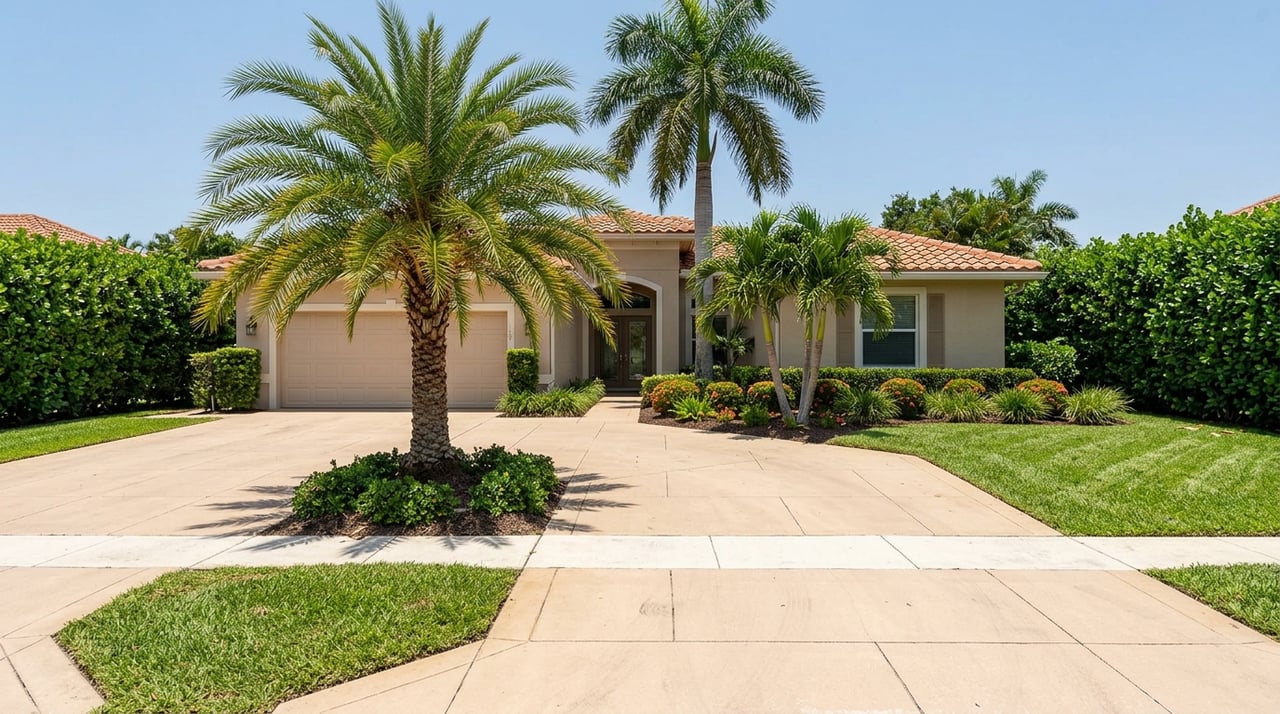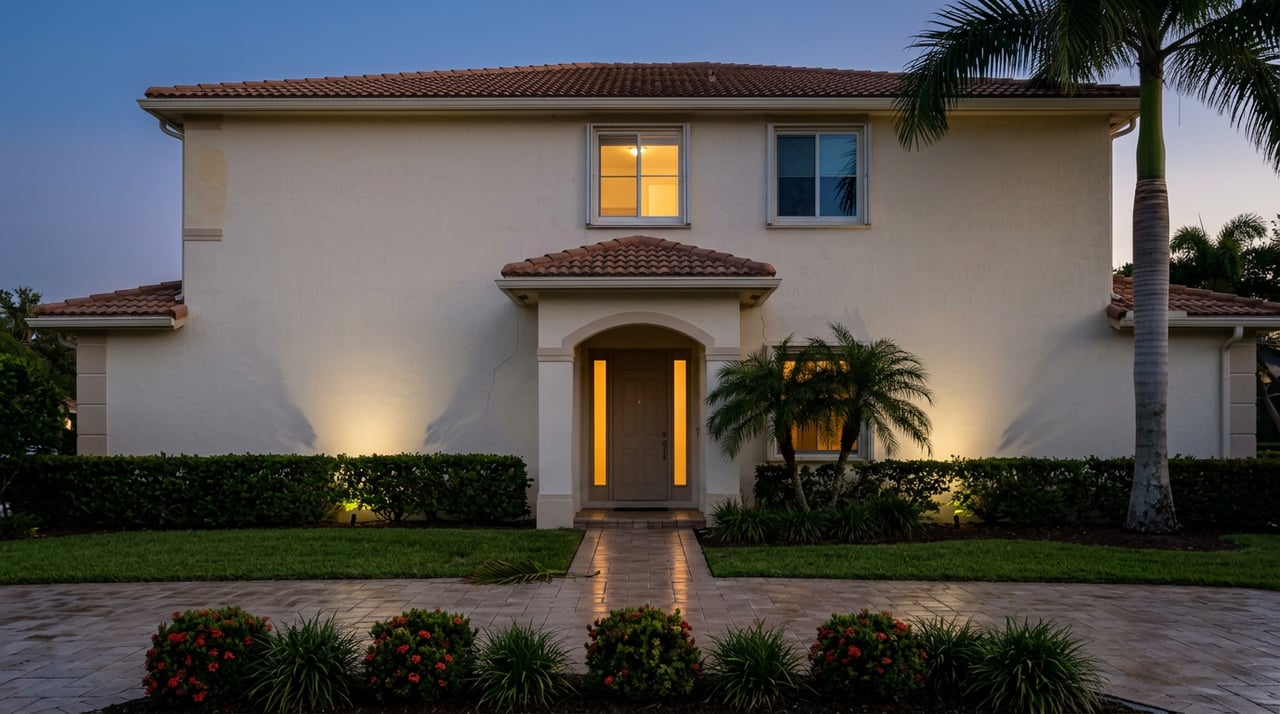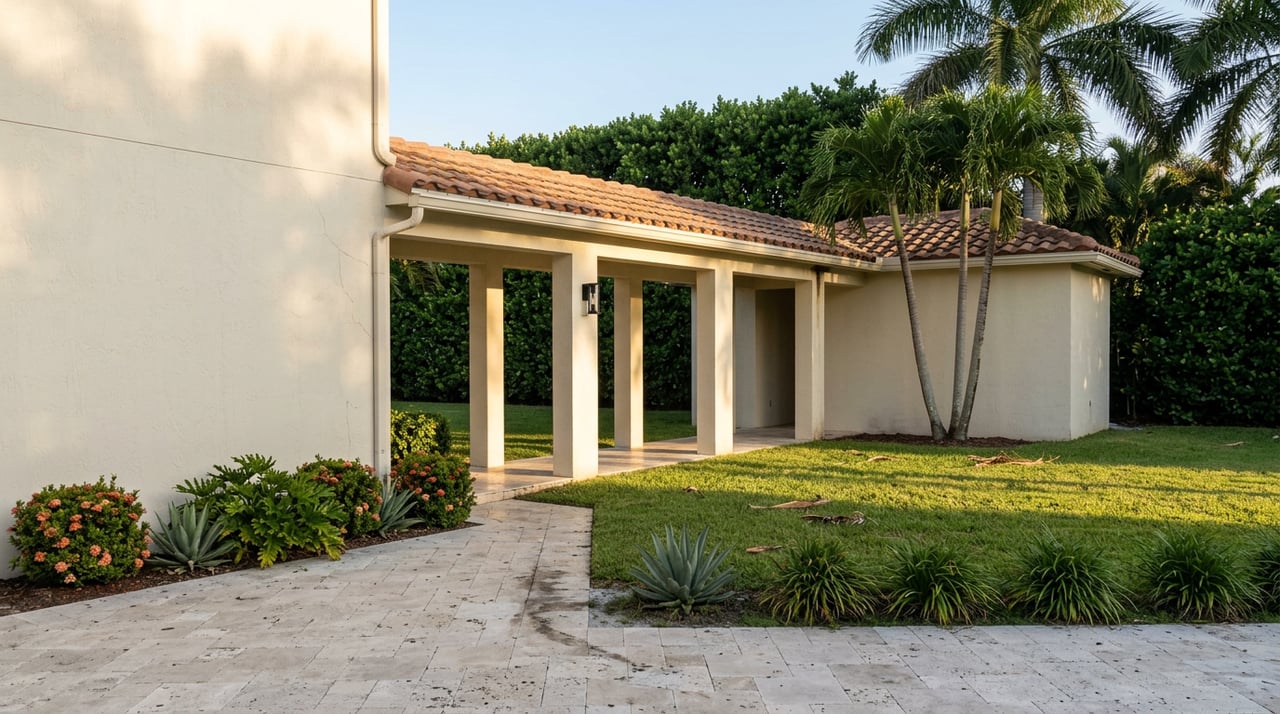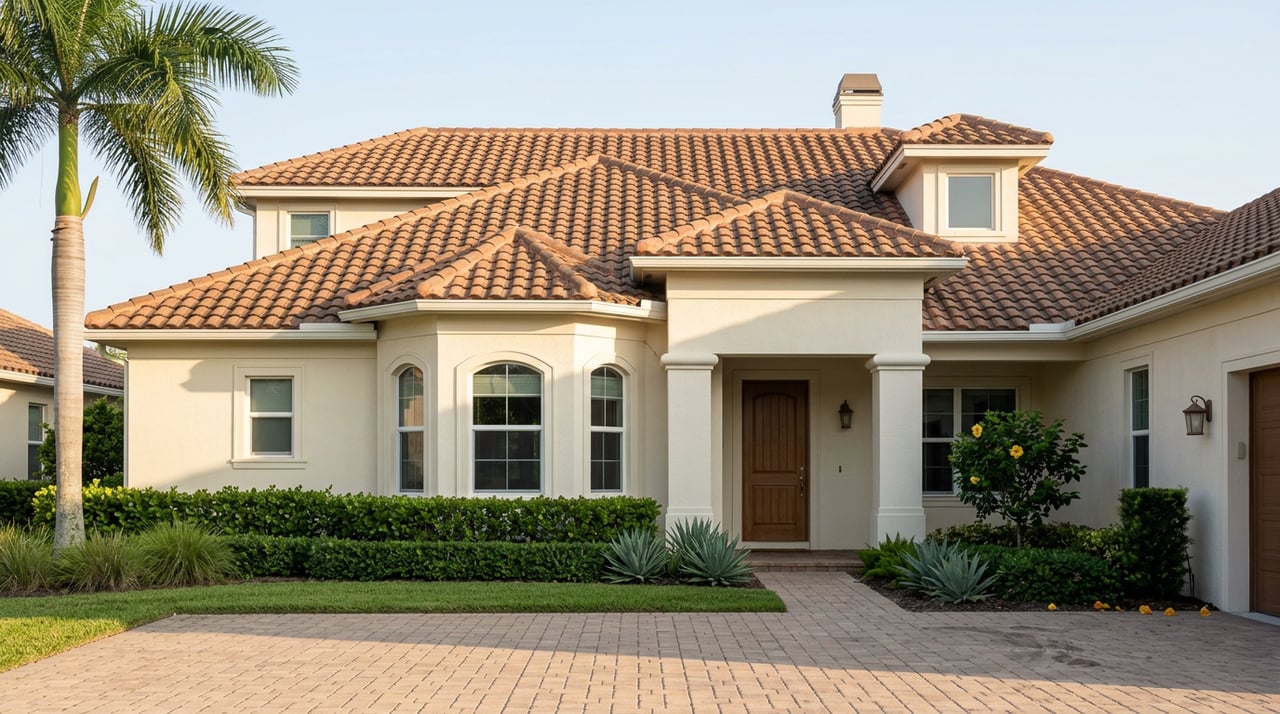
Two buyers walk into contract on the same week this fall. Both are closing on three-bedroom homes in Weston, both around $850,000, both roughly 2,400 square feet. One buyer's insurance quote comes back around $4,200 a year. The other's comes back closer to $9,000. Same city. Same price band. Same size house.
The difference isn't the school zone, the pool, or the lot. It's a date stamped on a permit that neither buyer has thought to ask about: whether the home was built before or after March 1, 2002.
That date is when the Florida Building Code became mandatory statewide, replacing the patchwork of local codes that governed construction before it. Homes built to the 2002 code and after generally carry stronger roof-to-wall connections, tougher window standards, and structural requirements that insurers reward with real discounts. Homes built before it don't get graded on a curve. In most of Florida, that line is scattered unevenly across a county, hard to see without pulling permit records. In Weston, it isn't scattered at all. It runs almost exactly along the seam of the city's own development history.
The Two Weston Timelines
Weston's housing stock comes from two separate development stories that only later became one city.
Bonaventure was sold off and developed independently starting in the 1970s, well before the rest of what is now Weston existed as a planned community. It voted to join the newly incorporated City of Weston in 1997, by roughly a two-to-one margin, but its housing stock was already built out well before that vote. That means most of Bonaventure's original homes went up under construction standards from the 1970s and 80s, long before the 2002 code and, in a lot of cases, before the post-Hurricane Andrew reforms of the mid-1990s that first introduced hurricane strapping as standard practice.
The rest of Weston came from Arvida, the developer behind the master-planned community originally called Indian Trace. The earliest Arvida-built homes went up in 1984, in what became the Windmill Ranch Estates and Country Isles sections. Those are also pre-2002 construction, no different from Bonaventure in that respect. But Arvida kept building through the 1990s and into the 2000s, and later neighborhoods including Weston Hills, Savanna, The Ridges, and Emerald Estates span that construction window on both sides of the code change. Some of those homes clear the March 2002 line. Some don't.
The practical result is that construction era in Weston isn't a fine-grained, block-by-block variable the way it might be in an older, infill neighborhood. It clusters by section, because entire subdivisions went up in the same handful of years under the same code. A buyer comparing a listing in Bonaventure to one in a newer pocket of Weston Hills isn't just comparing floor plans. They're comparing two different regulatory eras, and the insurance market prices that difference whether or not the listing sheet mentions it.
What the Wind Mitigation Inspection Actually Surfaces
A wind mitigation inspection, filed on the state's OIR-B1-1802 form, documents specific construction features: roof shape, the type of roof-to-wall attachment, whether openings are protected, and whether a secondary water barrier exists under the roof covering. Homes built after the 2002 code tend to check most of these boxes automatically, because the features were required at construction. Homes built before it often have none of them, unless a later owner retrofitted the roof or added impact windows.
This is where the two-buyer scenario from the top of this piece actually happens. The inspection isn't a formality. It's the document that either confirms a home qualifies for the code-compliance credits built into Florida law, or confirms that it doesn't, and the insurer prices accordingly. On an older Bonaventure home with a roof that predates any retrofit, that can mean losing out on wind mitigation credits worth a meaningful percentage of the windstorm portion of the premium. On a newer Weston Hills or Emerald Estates home built to code, those same credits are often already sitting in the file.
Buyers who assume the wind mitigation inspection is a rubber stamp are the ones who get surprised at the underwriting stage, sometimes after they've already gone hard on a deposit.
The Second Deadline: 25 Years, Not 40
There's a separate clock running alongside the insurance question, and it hits the same older housing stock even harder.
Broward County's Board of Rules and Appeals revised what used to be called the 40-Year Building Inspection Program, moving the trigger age down to 25 years, consistent with Florida Statute 553.899. The change means buildings across Broward, including Weston's older construction, now come up for their first mandatory structural and electrical recertification a decade and a half earlier than the old rule required. Weston's Building Code Services department, run by Building Official Reginald Cox, oversees these inspections locally, and the city earned a Class 2 rating in the Insurance Services Office's Building Code Effectiveness Grading Classification in 2024, a strong score that reflects consistent code enforcement.
For a Bonaventure home built in the late 1970s or early 80s, this isn't a distant milestone. It's already come and gone, possibly more than once, and if repairs were flagged and not closed out, that becomes a document a buyer's attorney or lender will want to see before closing, not after. For the newest sections of Weston Hills or Emerald Estates, the 25-year mark is still years away. Same city, same HOA-style architectural review process on paper, very different amount of paperwork actually sitting in the file.
What 2026's Rate Relief Changes, and What It Doesn't
There's real good news in the Florida insurance market this year. Citizens Property Insurance Corporation filed for a statewide average rate decrease effective in 2026, with Broward and Miami-Dade seeing among the largest reductions in the state. Several private carriers have filed their own decreases alongside it, the first broad relief the market has seen in years after a run of steep increases.
That's a genuine shift, and it matters for anyone budgeting a purchase this year. But a statewide average rate cut doesn't erase the construction-era gap described above. It shifts the whole curve down by a percentage, which means the pre-2002 home and the post-2002 home both get cheaper, in roughly the same proportion. The home with fewer wind mitigation credits is still the home paying more, just paying a slightly smaller amount of more. A rate cut is not a substitute for knowing which side of the code line your future roof sits on.
What to Actually Ask Before You Write an Offer
For any Weston home you're seriously considering, especially in older sections:
- Ask for the age of the roof and whether it's been replaced since the home's original construction, and if so, when and to what code.
- Request a copy of the wind mitigation inspection if one already exists, or budget for a new one before you're deep into underwriting.
- Ask whether the property has already gone through its 25-year (or older, 40-year) recertification, and if repairs were required, whether they were closed out with the city's Building Code Services department.
- Get an actual insurance quote before you finalize your offer price, not after your loan is already in underwriting. A five-figure gap in annual premium changes what a given purchase price actually costs you to carry.
None of this means avoiding Bonaventure or any of Weston's older sections. Plenty of buyers value the mature landscaping, the established country club lifestyle, and prices that can be more approachable than the newest construction. It means going in with the insurance and recertification questions answered before the offer, not discovered during it.
A Few Direct Questions
Does every home in Bonaventure carry higher insurance than every home in Weston Hills? Not necessarily. A pre-2002 home with a fully replaced, code-compliant roof and retrofitted impact windows can carry solid wind mitigation credits regardless of its original construction date. The original build year sets the starting point, but documented upgrades can move a home closer to what a newer property qualifies for.
Is the 25-year inspection the same thing as a wind mitigation inspection? No. The 25-year program, run through Weston's Building Code Services and governed by Broward's BORA under state statute, is a structural and life-safety recertification. The wind mitigation inspection is a separate, insurance-specific report on the OIR-B1-1802 form. A home can need one, both, or neither depending on its age and history.
Should I skip an older home entirely because of this? That's a personal budgeting decision, not a blanket rule. The right approach is pricing in the actual insurance quote and any recertification status before you commit, so the decision is made with real numbers instead of an assumption based on the list price alone.
If you're weighing a purchase in Weston and want a clearer read on what a specific address is likely to face on the insurance and recertification side before you write an offer, The Scarberry Group can walk through it with you. Request a complimentary home valuation and staging consultation to start the conversation with the full picture, not just the list price.