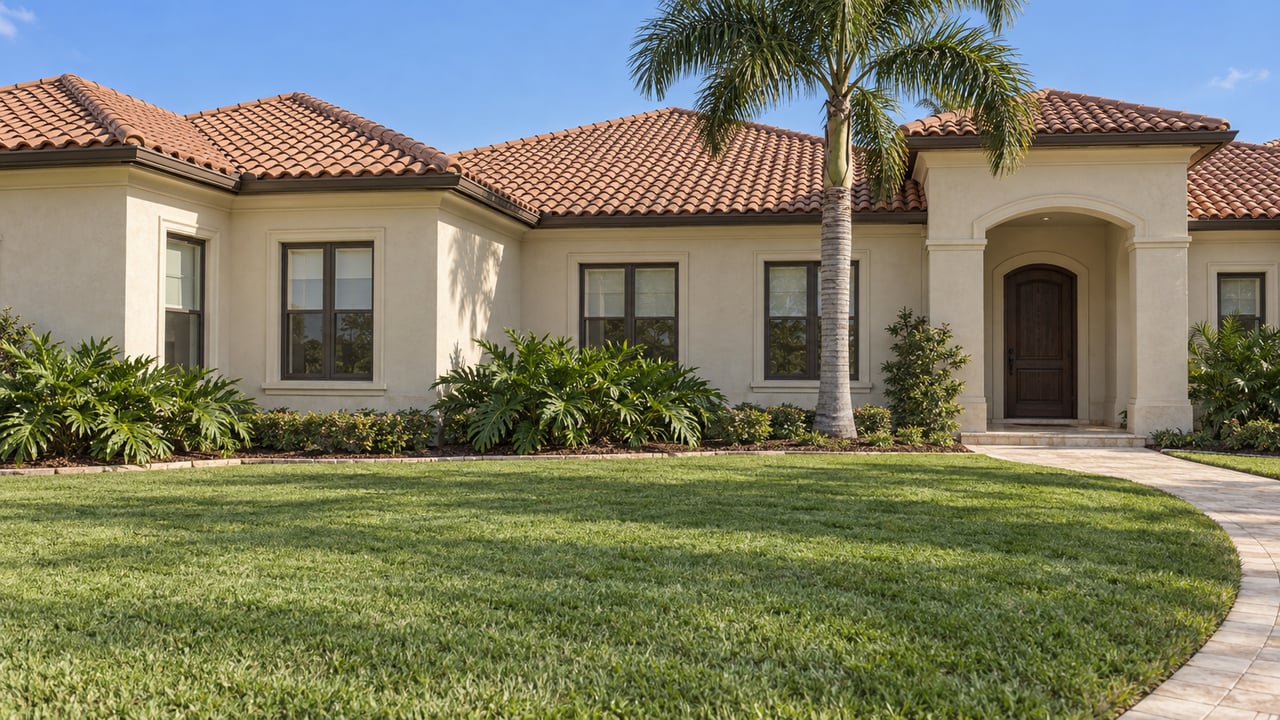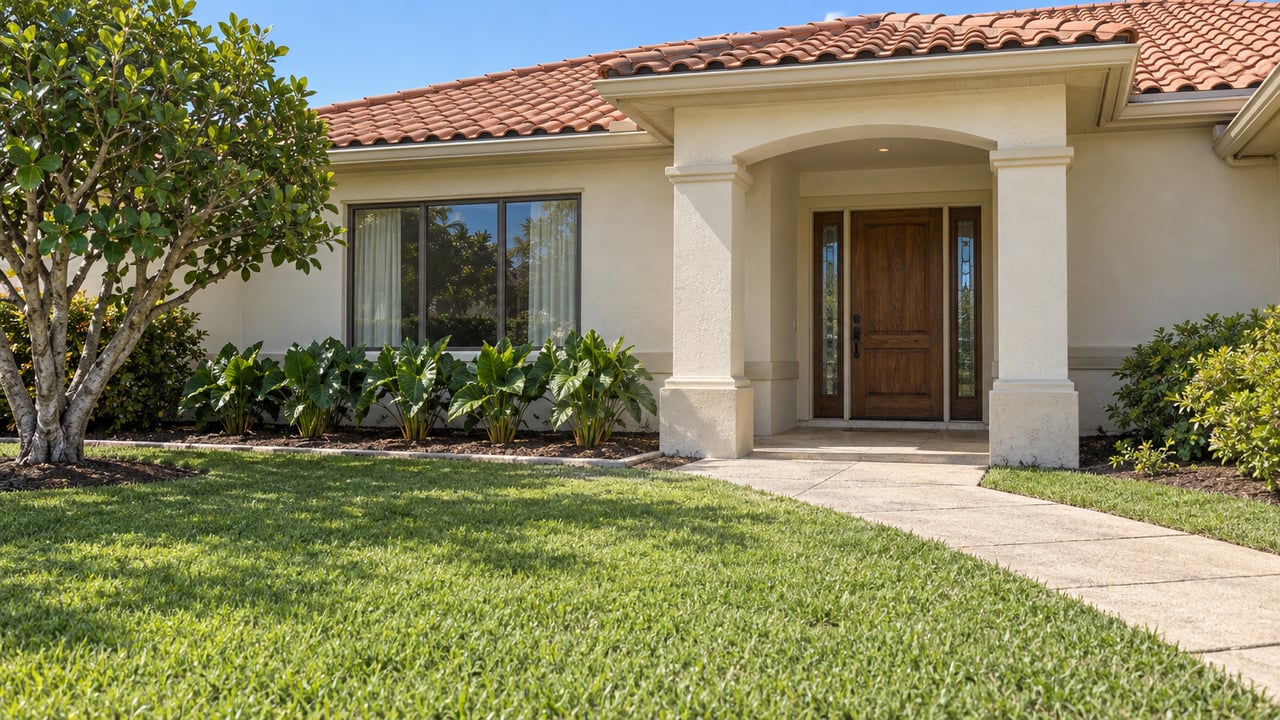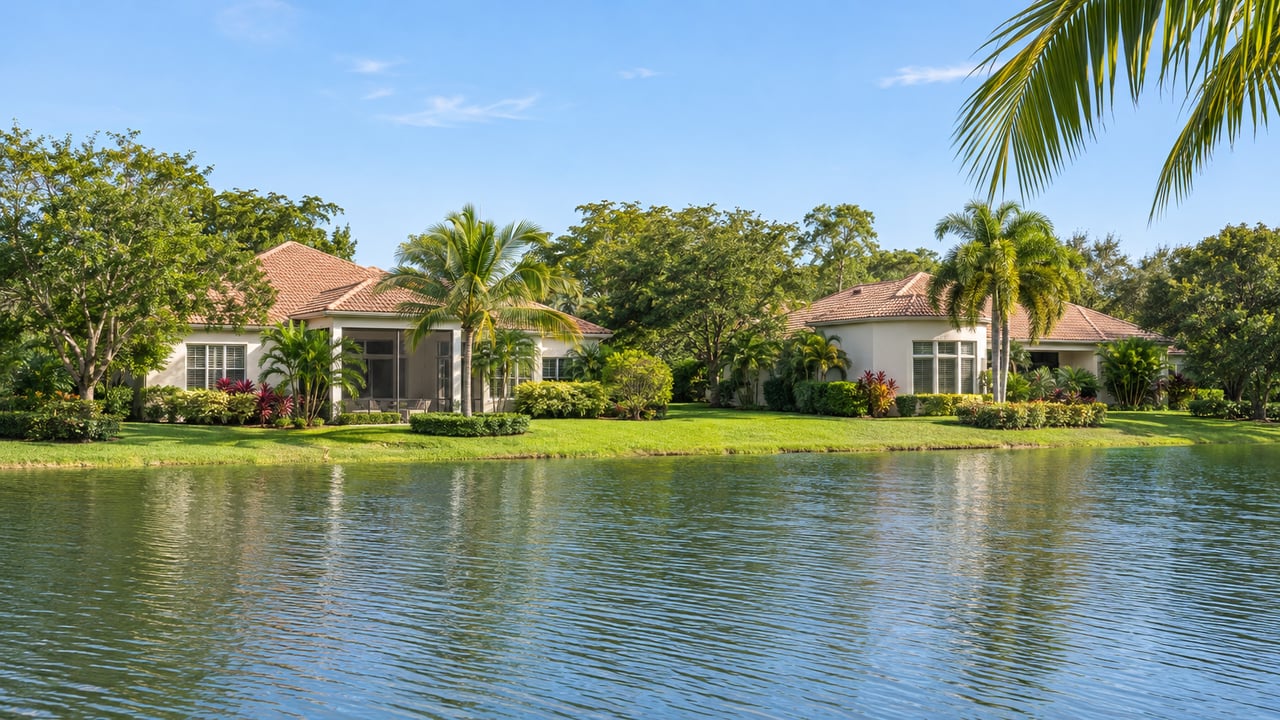
Two families close on matching houses on the same Weston cul-de-sac in the spring of 2027, and both file for a homestead exemption for the 2028 tax year. Same builder, same price, same assessed value. One family moved to Florida years ago. The other arrived in 2027. Why could the second family pay several hundred dollars more on the city line of the tax bill every year into the early 2030s?
Amendment 3 explains it. Florida voters approved it on November 3 with 61.98% of the vote statewide, according to WUSF. Weston's nine precincts voted 67.48% yes, the Weston Journal reported. Along with a bigger exemption, the amendment's text sets a residency date that sorts Weston buyers into two groups before anyone looks at a listing.
The Sentence That Divides Buyers
The raised exemption applies to all levies other than school district levies. It rises to $150,000 of assessed value on January 1, 2027, and to $250,000 on January 1, 2028. The enrolled resolution then carves out a second group. In the Legislature's enrolled text, it covers a homestead owner:
"who had not maintained a permanent residence in this state as of December 31, 2026"
That owner gets the existing $50,000 non-school exemption. The larger amount starts only "with the fifth year of exemption." The rewritten summary in the state's official ballot booklet says the same thing in plainer words. It adds that the delay applies "to the extent permitted by the U.S. Constitution."
The trigger for the larger amount is Florida residency on December 31, 2026. The Weston closing date matters for a different reason. Broward determines permanent residence on January 1 of each year, so the closing date sets the first tax year an owner can claim any homestead exemption. On the amendment text's face, a family that was already living in Florida on December 31, 2026, sits outside the delayed group, even if it buys its Weston homestead later. In an October 2 webinar recap, Florida Realtors told renters to keep proof such as a driver's license, voter registration or utility bills. It also confirmed that people who move after the cutoff get the existing exemption until their fifth year of exemption.
The City of Weston's property tax reform page describes the rule as applying to people who establish residency "after January 1, 2027" and then maintain it for five years. That wording follows the original ballot summary, which a judge ordered rewritten in August. The operative text uses December 31, 2026, and counts years of exemption.
What the Gap Is Worth on Weston's City Line
The Weston Journal worked through the city's share of the bill at the new rate of 3.5046 mills, for a homestead assessed at $250,000 or more. The same math shows what the delayed group gives up:
| Tax year | Owner who lived in Florida on Dec. 31, 2026 | Newcomer in years one through four of exemption |
|---|---|---|
| 2027, homestead held on Jan. 1, 2027 | $100,000 more exempt, about $350.46 off the city line | $50,000 exemption, no change |
| 2028, at today's rate | $200,000 more exempt, about $700.92 off the city line | $50,000 exemption, no change |
After 2028, the exemption adjusts for inflation, according to the ballot summary, so the 2028 figure is a starting point and will change in later years. For a newcomer whose first exemption year is 2028, the fifth year of exemption falls in 2032.
That is only the city's line, about 19% of a Weston property tax bill by the city's own count. The larger exemption also reduces Broward County and the other non-school levies, so the full gap between the two families is wider than the table shows. On matching houses, the difference sits entirely in when each household became a Florida resident.
Weston Already Moved Its Rate
The city didn't wait for the vote. The City Commission adopted 3.5046 mills for fiscal year 2027, up from 3.3464 mills, a rate Weston had held for eight straight years. That works out to about $15.82 more per $100,000 of taxable value, and it appears on the tax bills mailed November 1. The city's fiscal 2027 adopted budget summary gave one reason, the Weston Journal reported. Amendment 3 "will significantly affect the City's General Fund," and the new rate "ensures the City can continue operating effectively no matter how the November election unfolds."
The city manager had first recommended 3.6260 mills. The adopted budget settled lower and draws $675,000 from fund balances. Property tax is about 58% of the general fund's $78.5 million in revenue this year, and the Broward Sheriff's Office police contract rose 9.33%. In practice, a newcomer in the delayed group pays the higher city rate starting now, with only the $50,000 exemption against it.
The city has said plainly how this tends to play out. If Weston raised its rate to recover lost revenue, "most homestead property owners would still see savings," while non-homestead owners would pay more. In the city's words, "some would pay less while others would pay more." Weston's tax base is 88% residential, and 62% of that taxable value is homesteaded. The remaining 38% includes rentals and second homes. Those owners get no new exemption, though the amendment cuts their annual assessment cap from 10% to 5%.
Neighboring cities give a sense of scale. Fort Lauderdale estimated losses of $17 million and $27 million in the first two years, and Hollywood estimated $20 million and $34 million, according to Axios.
The Charges the Exemption Never Reaches
Even the full $250,000 exemption leaves parts of a Weston bill untouched. The amendment exempts homestead property "except assessments for special benefits." The Broward County Property Appraiser's tax estimator also leaves out non-ad valorem fees such as fire, garbage, light and drainage charges. For a Weston single-family home in fiscal 2027, that leaves:
- School district levies. The larger exemption doesn't apply to them, and the school exemption stays at $25,000.
- Fire assessment. Up 8.98%, from $770.06 to $839.19 a year. It pays for Broward Sheriff's Office fire protection at all four of the city's fire-rescue stations.
- Garbage and recycling. $426.91 a year for curbside collection.
Together, the fire and garbage charges add $1,266.10 a year that both families on that cul-de-sac pay in full. Buyers who have read our earlier piece on why identically priced Weston homes carry different tax bills will know these lines already. Amendment 3 leaves them where they are.
Rules Still Being Written
The amendment takes effect January 1, 2027. It leaves the procedures to the Legislature "by general law." Four points bear on a buyer this winter:
- Proving residency. A November 6 client alert from the law firm Bilzin Sumberg says the amendment doesn't specifically define proof of permanent residence. It calls a Florida driver's license and voter registration persuasive but not conclusive. The Florida Department of Revenue's homestead brochure lists evidence an appraiser "may ask" for, such as vehicle registration, a declaration of domicile, employer and tax-return address.
- The special session. Gov. Ron DeSantis said on November 4 that he would call lawmakers back before his term ends in early January to set the exemption schedule and keep local governments from "taxing them in other ways," Florida Realtors reported. A November 7 Sun Sentinel editorial argued that January 1 is the effective date, and that lawmakers aren't held to it because homestead applications aren't due until March 1.
- A possible court fight. A Tampa Bay Times report republished by CPA Practice Advisor said the five-year requirement could face a challenge. In 1983, the Florida Supreme Court struck down a similar five-year homestead waiting period on state equal-protection grounds. That ruling expressly left the federal questions undecided.
- Broward's calendar. The Broward County Property Appraiser states that "January 1 of each year is the date on which permanent residence is determined." It lists the timely 2027 filing window as running through March 1, 2027, with a late-filing deadline of September 20, 2027. Its main page requires a Florida driver's license or ID plus either Florida voter registration or a power or water bill in an owner's name. Its FAQ also accepts a Declaration of Domicile.
This post is general information, not legal, tax or financial advice. Each household should confirm how these rules apply with a qualified attorney or tax professional and with the Property Appraiser's office.
A Few Direct Questions
Does portability carry the new exemption to a Weston home? Save Our Homes portability lets eligible owners move assessed-value savings to a new Florida homestead within three tax years. It doesn't transfer the homestead exemption, which has to be applied for again on the new home, according to the Broward County Property Appraiser.
Do Weston rentals and second homes get anything? They get no new exemption. Their annual assessment cap drops from 10% to 5%.
Is the broader Broward market shifting at the same time? In September 2026, Broward single-family inventory was down 18.1% year over year, at 4.2 months of supply. Sellers received a median 95.6% of original list price, according to the Miami Association of Realtors' Broward report. That share was up from 94.6% a year earlier. Fewer listings and sellers getting closer to their original asking price give buyers little room to trade price against a tax difference that runs for years.
A Weston buyer's tax picture in 2027 and beyond depends on the residency date, the city's new rate and the fixed assessments on the same bill. At The Scarberry Group, Phyllis Scarberry works through the full carrying cost of a home with buyers and sellers, alongside the list price. Request a complimentary home valuation and staging consultation, and we'll go over what Amendment 3 means for your Weston home's tax bill.